
Off-Service Training Sites
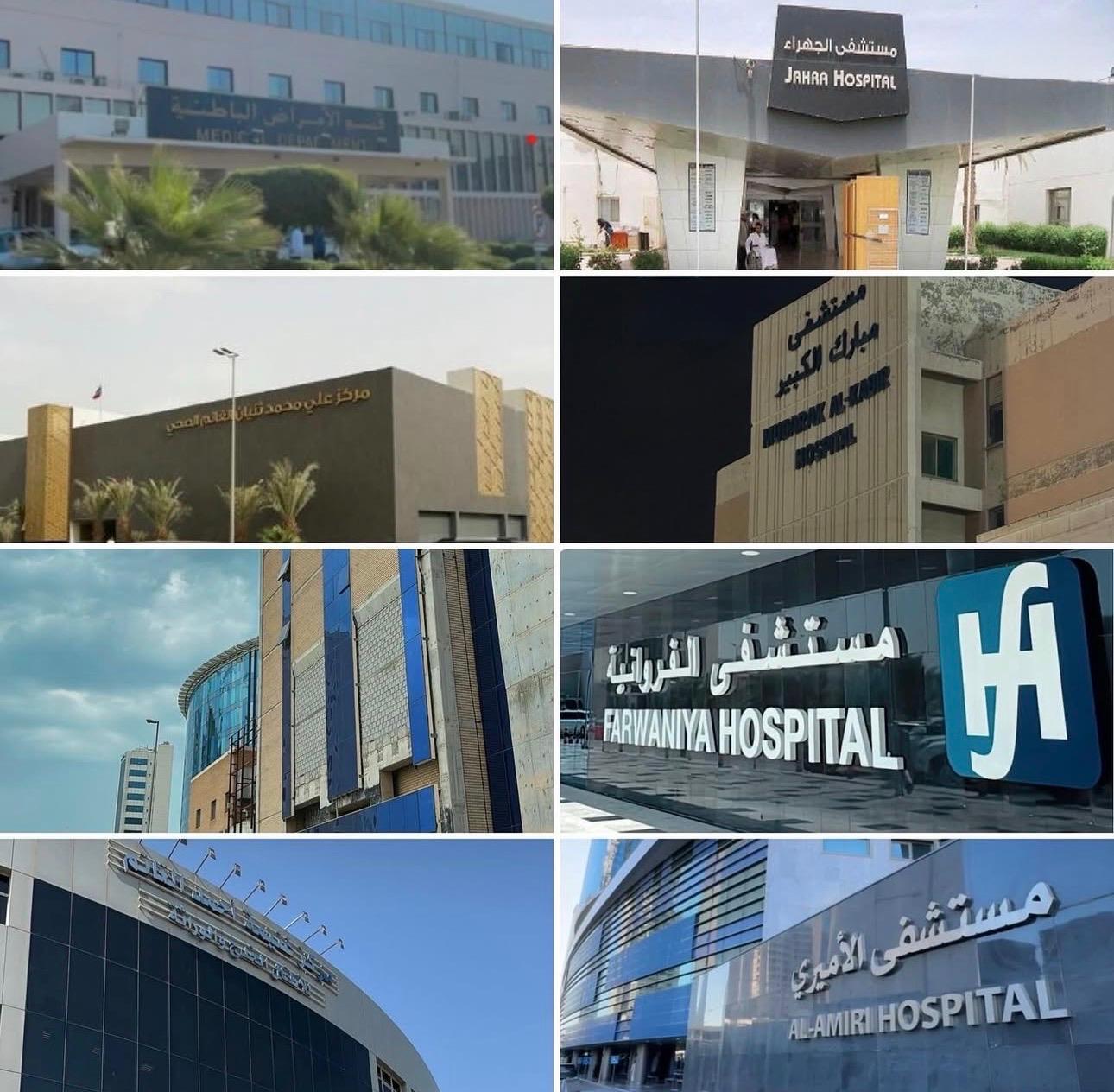
The Kuwait Board of Dermatology includes a wide network of off-service training sites to broaden residents’ medical expertise beyond dermatology. Internal medicine and pediatrics rotations are distributed across Kuwait’s largest hospitals, exposing residents to high case volumes, diverse patient populations, and complex multisystem conditions. Sites such as Al-Amiri, Mubarak Al-Kabeer, Farwaniya, Al-Sabah, and Jaber Al-Ahmed hospitals provide structured teaching, subspecialty exposure, and hands-on experience in acute care, chronic disease management, neonatology, and intensive care, coordinated by senior consultants with academic and clinical leadership roles.
Residents also rotate through specialized centers that reinforce multidisciplinary learning. The Infectious Diseases Hospital provides experience in communicable disease management and outbreak control, while rheumatology units at Al-Amiri and Mubarak hospitals train residents in autoimmune and connective tissue disorders. Emergency medicine rotations at Al-Amiri and Mubarak emphasize acute stabilization and trauma care, while the Kuwait Medical Genetics Center introduces residents to genetic counseling, molecular diagnostics, and syndromic dermatogenetics. Family medicine sites such as Ali Thunayan Al-Ghanim Center and Khaled Saleh Al-Ghanim Medical Center immerse residents in primary care and chronic disease continuity, underscoring dermatology’s overlap with general practice.
Surgical and complex care experiences are also prioritized. The Al-Babtain Center for Burns, Plastic, and Reconstructive Surgery and the department of plastic surgery in Jaber Al Ahmed Al Sabah Hospital expose residents to wound healing, scar management, grafting, and reconstructive procedures. At Jaber Al-Ahmed Hospital, PGY-3 residents gain focused training in complex wound care, including diabetic foot ulcers, vascular ulcers, and advanced wound therapies with multidisciplinary collaboration. Collectively, these rotations provide comprehensive training across internal medicine, pediatrics, infectious diseases, rheumatology, genetics, family medicine, emergency medicine, plastic surgery, and wound care, ensuring residents develop the systemic knowledge and clinical skills necessary to practice dermatology in its full medical and surgical context.